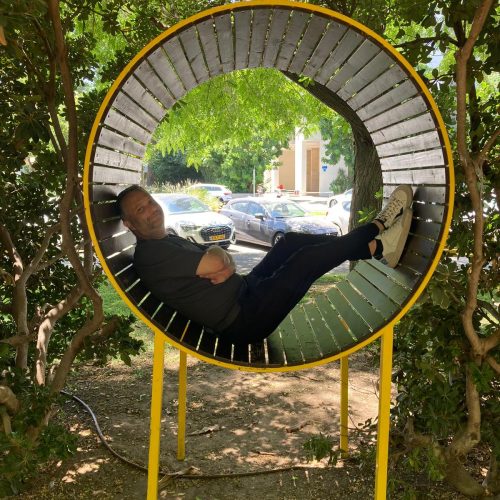
"Points of View- Early Childhood through an Urban Perspective" Study tour

An immersive professional study tour in Tel Aviv–Yafo for municipal professionals, designed to broaden perspectives on early childhood through an urban lens. The tour explores a range of urban issues through a holistic view of the city, combining hands-on experiences with practical tools and insights that participants can apply in their own municipalities.

In 2023, Tel Aviv–Yafo was designated a Lighthouse City by the Van Leer Foundation as part of the global Urban95 initiative, recognizing the city as one of the program's leading municipalities worldwide. This recognition prompted a deeper reflection on what it means to serve as a Lighthouse City, leading to the understanding that its primary role is to extend its impact beyond its own boundaries by sharing the knowledge, experience, and insights accumulated since the launch of Urban95 in Tel Aviv–Yafo. Through this exchange, the city seeks to contribute to improving the ways young children develop, play, interact, and move through the urban environment.

The Study Tour as a Learning Experience

The program was developed following an in-depth exploration of how to extend the impact of Urban95 beyond Tel Aviv–Yafo by sharing the knowledge and experience accumulated over years of implementation with other local authorities across Israel. A study tour was chosen as the primary format for this exchange because it offers an engaging and effective way to inspire participants while fostering learning, peer exchange, collaborative inquiry, and knowledge sharing.

The three-day program is designed to take participants behind the scenes of Urban95 in Tel Aviv–Yafo, offering insight into the motivations behind the initiative, the processes that shaped it, the challenges encountered along the way, and the city's approach to implementation. Rather than presenting a model to be replicated, the tour encourages each local authority to develop its own approach to early childhood, tailored to its unique context and needs. To support this learning process, the program combines a range of learning formats—including plenary sessions, professional peer groups, and municipal team discussions—with varied methodologies such as lectures, site visits, hands-on workshops, and meetings with practitioners from across the initiative.

Following the tour, participating municipalities join the Urban95 Israel community, where they continue to receive strategic support for advancing early childhood initiatives locally, alongside ongoing access to professional knowledge, resources, and international best practices.

Diverse Municipal Teams: It Takes a City to Raise a Child

Reflecting the holistic view that supporting young children is a shared responsibility across municipal departments, each local authority was asked to assemble a multidisciplinary team representing five municipal administrations: Education, Community, Public Space Planning, Parks & Gardens, and Strategic Planning. Bringing together professionals who do not typically collaborate on early childhood issues fostered a shared language, strengthened cross-departmental coordination, and encouraged a more integrated approach to supporting young children.

From Principles to Practice

Beyond broadening perspectives and inspiring new ideas, a central component of the study tour was equipping participants with practical principles and tools for advancing early childhood initiatives. The learning drew on the breadth of projects implemented in Tel Aviv–Yafo, as well as the extensive experience of the city's professional teams. Throughout the tour, participants worked in their own cross-departmental municipal teams to translate these principles into practice, reflecting on how they could be adapted to the unique context, priorities, and characteristics of their own local authority.

Refining the Model and Sustaining Implementation

Lessons learned from the first cohort, supported by a comprehensive monitoring and evaluation framework, informed the refinement of both the methodology and the professional tools used in the second and third cohorts. This ongoing learning process also led to the involvement of selected program alumni as change agents, who shared their implementation experience through an alumni panel, strengthening the connection between theory and practice. Looking back over the first two years of the program, a clear shift emerged from inspiration to implementation. Many participating local authorities successfully translated the tour's principles into concrete action—from launching place-based projects to embedding an early childhood perspective into municipal work plans and policy documents.

Partnering municipal units:
Community, Culture, and Sports Administration; City Architect; Education Administration;  City Beautification Department; Mishlama Jaffa; Strategic Planning Unit;  City Spokesperson’s Office; the Digitaf Team; Transportation, Traffic, and Parking Authority.

סיור מקצועי - שפ"ע

Impact

  • Learning, inspiration, and motivation to act: Participants expressed very high levels of satisfaction with the program, highlighting the knowledge, practical tools, and inspiration they gained to develop new ideas and launch projects in their own municipalities.
  • Understanding early childhood needs and building the capacity to apply the principles: Participants reported that the program deepened their knowledge and understanding of urban challenges, early childhood-responsive planning, the development of community-based responses, and public participation processes.
  • A new professional perspective and practical solutions: Participants described a new understanding of the relationship between their professional roles and the needs of young children and their caregivers. They also reported an increased ability to identify and promote simple, practical changes that can significantly improve the urban environment without requiring major budgets.
  • Placing early childhood on the municipal agenda: The initiative successfully engaged municipal leadership, including chief executives and mayors, helping raise the priority of early childhood on the municipal agenda.
  • Cross-departmental collaboration and new ways of working: Municipalities reported increased collaboration across departments, along with regular working meetings to advance cross-organizational initiatives and data-informed decision-making.
  • Launching pilot projects and tangible interventions: Municipalities implemented a range of projects across public spaces and community services, translating the theoretical framework into practical interventions that improved safety, accessibility, and the urban experience for young children and their caregivers.
  • Strategic integration into municipal planning: Municipalities initiated the development of policy documents that included dedicated early childhood chapters as part of a broader systems approach. Many also reviewed and refined work plans and projects already under development, aligning them with the language and principles of Urban95 introduced during the tour.
  • A peer network and mutual learning: The initiative fostered a community of Urban95 ambassadors who demonstrated a strong willingness to share knowledge and practical experience from their own municipalities within the Urban95 Israel community.
  • Tel Aviv–Yafo as a national hub for learning and knowledge sharing: The city strengthened its position as a national professional hub by hosting learning visits for municipalities, leading the Parents' Voice in the City conference with hundreds of participants from across Israel, and delivering a complementary hands-on workshop for municipal teams.

What we learned along the way

  • The right mix of participants matters: Bringing together senior managers from different professional fields is essential for creating a shared language and maximizing the initiative's potential to influence municipal policy.
  • Experiential and varied learning is more effective: Combining hands-on workshops with site visits accommodates different learning styles and helps maintain participants' engagement throughout the tour.
  • Avoiding a project-driven approach encourages lasting impact: Leaving the tour open-ended, without requiring an immediate deliverable, allows participants to focus on the underlying principles and theory from which locally relevant initiatives can emerge naturally.
  • Direct engagement enriches learning: Opportunities for open dialogue with professionals, frontline practitioners, and program alumni provide valuable perspectives and practical inspiration grounded in real-world experience, including both successes and challenges.
  • Senior leadership support is critical: The active backing of municipal leadership, including chief executives, proved essential for maintaining momentum after the tour and advancing the team's recommendations within the organization.
  • Ongoing support sustains momentum: Continued professional guidance, including support in engaging senior decision-makers, is essential for maintaining momentum and long-term commitment amid the demands of day-to-day municipal work.
Photo by Shani Loya

The project was created and operated in partnership with