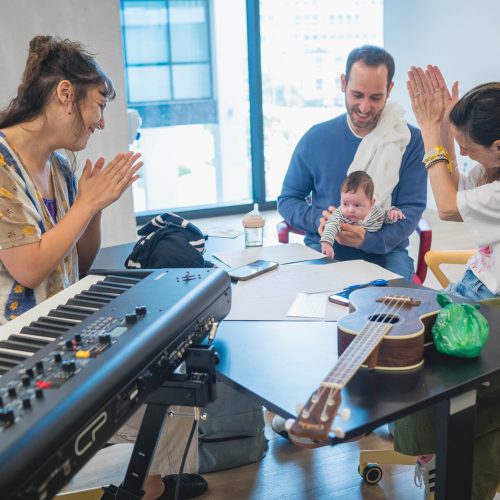
The Lullaby Project, an initiative of the Carnegie Hall's Weill Music Institute, has been delivered in a wide range of institutions around the world over the past decade. The program pairs new parents with professional musicians to create a personalized lullaby for their baby.
The project was originally designed to support vulnerable families by promoting maternal well-being, healthy child development, and strong early bonds between parents and their young children. It was intended for families navigating a wide range of emotional and practical challenges associated with becoming parents or expanding their family, including surrogacy, language barriers, premature or unexpected birth, young parenthood, and other complex life circumstances.
Through a shared creative process, parents are given the opportunity to reflect on and process their experiences, connect with others who have faced similar journeys, and express hopes, wishes, and aspirations for their child—sentiments that can easily be overshadowed by the demands of everyday life with a newborn.
Inspired by the international model, the project was introduced to Tel Aviv–Yafo as the first municipal-scale implementation of its kind, with the goal of making the program accessible to a broad audience. The initiative brings together musicians and parents of infants from birth to six months for a collaborative creative process, resulting in a personalized lullaby uniquely crafted for their family.
The program is delivered through intimate group sessions involving approximately five couples and five musicians. Each session begins with a shared conversation about the role of music in family life and participants' personal connections to it. Parents are then paired with a musician for an individual songwriting session, building on a preparatory exercise in which they reflect on and write down words, wishes, and hopes that capture the essence of their child. Together, they write and compose an original lullaby tailored to the family's story and character.
The project seeks to inspire a new family tradition through music, while strengthening the bond between parents and their newborn and giving voice to the family's values, hopes, and heritage. At the end of the process, each lullaby is professionally recorded, and families receive a guide with practical suggestions for incorporating it into everyday routines.
The program is grounded in the understanding that the emotional demands of early parenthood leave many parents with little opportunity to process their experience. The shared creative process provides that space, transforming the lullaby into both an emotional anchor and a practical resource that accompanies the family in daily life, soothes the baby, and strengthens parents' sense of confidence and connection.
The project was initially launched as a small-scale pilot at three locations, using a multi-session format. The pilot focused on specific target populations, including LGBTQ+ families, families of premature infants, and new immigrants, and demonstrated both the artistic and emotional value of the program. At the same time, it became clear that a multi-session format posed logistical challenges for parents of young infants, making sustained participation difficult. The pilot also highlighted the need for a more efficient delivery model—one capable of reaching a critical mass of residents while supporting implementation on a citywide scale.
As the project evolved into a model suitable for citywide implementation, it underwent both a conceptual and structural transformation. The original multi-session format was redesigned as a single, immersive creative workshop lasting approximately four and a half hours. This shift reflected the understanding that achieving broader impact required reducing the logistical demands on parents by eliminating the need for multiple visits. Some workshops were scheduled on Friday mornings to make it easier for both parents to participate, significantly increasing fathers' involvement and strengthening the shared experience for couples. Each workshop brought the entire creative process—writing, composing, and recording—together into a single session.
During this phase, the program expanded to 16 community centers across Tel Aviv–Yafo, from the northern neighborhoods to the south and Jaffa. At the same time, the approach to recruiting musicians was reimagined. Rather than relying on external recruitment, musicians who had participated in the pilot became project ambassadors, recruiting, mentoring, and training new participants. This created a professional learning community of local musicians, committed to the project's values and responsible for sustaining its organizational knowledge.
The project sought to engage a diverse range of families, with a particular focus on residents of South Tel Aviv and the Arab community in Jaffa. In practice, however, a gap emerged between this aspiration and the program's reach. While the model proved highly successful among single-parent families, LGBTQ+ families, and the broader population, engagement among more vulnerable communities and the Arab community remained limited due to cultural and practical barriers. Despite targeted outreach and extensive promotion through community-based channels, participation in these communities was lower than anticipated. This highlighted the need for a different engagement strategy—one built on direct outreach through trusted local ambassadors.
Partnering municipal units: The Community, Culture and Sports Administration; the Culture Department; the Felicia Blumenthal Center for Music, the Tel Aviv Municipal LGBTQ Community Center; the Authority for Immigrant Absorption, Community Centers
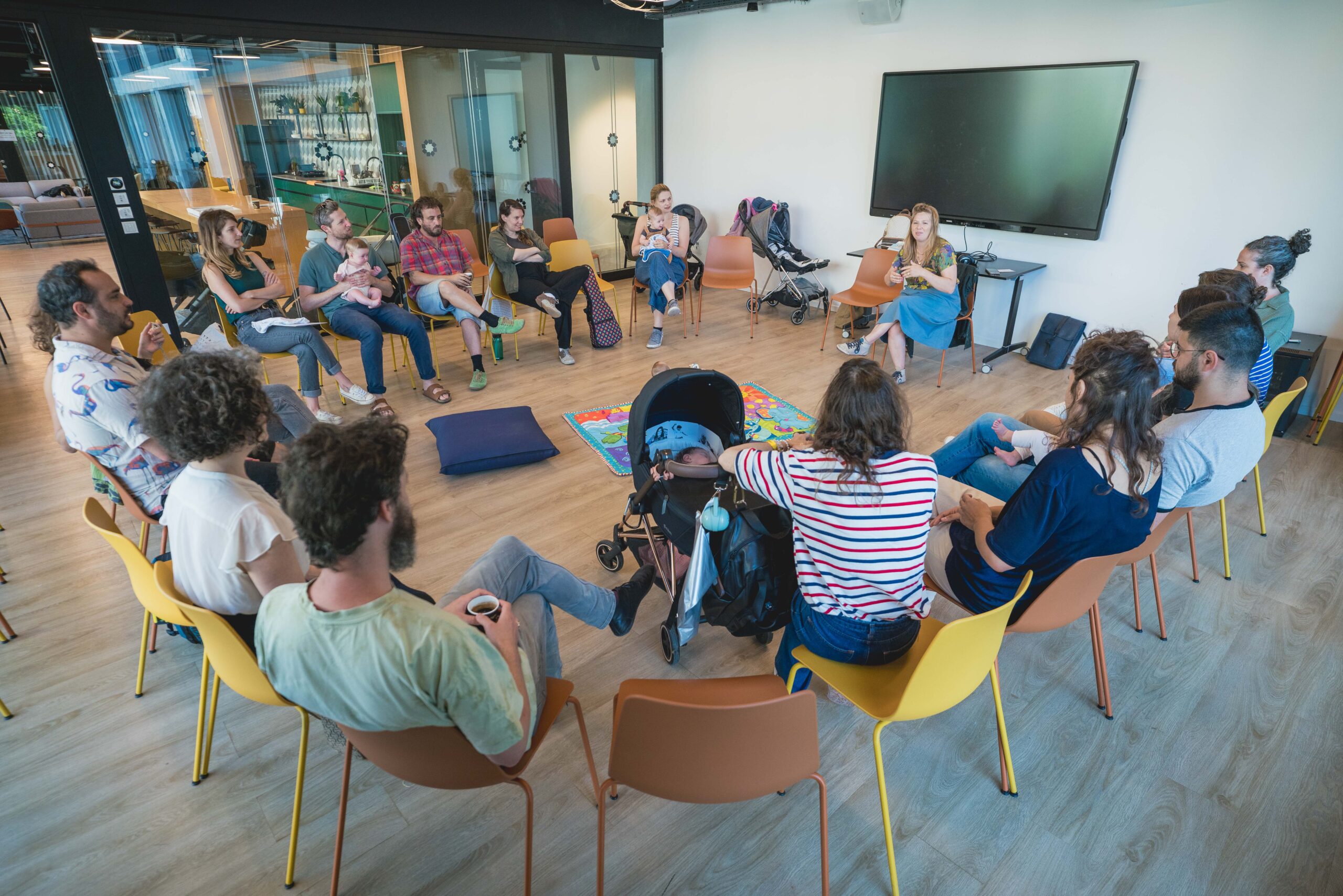


5–6 parent couples per group
A single-session workshop lasting approximately 4.5 hours
Community centers and cultural and music centers
*One-time training for musicians *Musicians’ fees *Project management and production *Music editing and recording *Refreshments *Marketing
Parents of infants from birth to six months of age